


Asbestos-Linked Sand Prompts School Closure in Fig Tree Pocket

A school in Fig Tree Pocket temporarily closed its campus after identifying recalled coloured sand linked to asbestos concerns.


Background on the Sand Recall

A national recall was issued on 14 November after testing detected traces of chrysotile asbestos in several brands of decorative coloured sand used for activities in schools and early learning settings.

The recalled products included Kadink Sand, Educational Colours Rainbow Sand and Creatistics Coloured Sand, which were distributed through various education and retail suppliers.

Fig Tree Pocket asbestos
Photo Credit: ACCC Product Safety

Closure at Fig Tree Pocket

Mancel College confirmed on 14 November that the recalled sand product had been used on its campus. The school closed immediately to allow the product to be secured and handled in line with testing and remediation requirements.

Students who were present were moved away from affected areas while the materials were quarantined.

Local Response Linked to the Recall

Another Brisbane service, Indooroopilly Outside School Hours Care, notified families that the sand had been part of earlier activities.

It initially announced an afternoon closure before confirming it could continue operating based on updated advice after removing remaining sand products.

asbestos recall
Photo Credit: ACCC Product Safety

Expert Advice and Testing Findings

Testing laboratories reported an increase in enquiries from families and retailers after the recall was announced.

Initial assessments from interstate schools where the product had been used indicated negative air-testing results, with experts stating the overall health risk from the coloured sand was low.

Laboratories noted that airborne asbestos had not been detected in tested samples.

coloured sand
Photo Credit: ACCC Product Safety

Actions in Other Parts of Australia

While Fig Tree Pocket and the ACT saw closures, many other jurisdictions advised schools to remove, seal or store the affected products as a precaution rather than close.

Additional coloured sand products, including magic sand items and a sandcastle building set, were pulled from sale by major retailers following further detections.

Next Steps for the Fig Tree Pocket Community

Mancel College advised that it would continue assessments over the weekend of 14 November and planned to update families about attendance for the start of the following week.


The recall notice remains active, and guidance recommends that families secure the products in sealed heavy-duty bags and follow approved asbestos disposal requirements.

Published 18-Nov-2025

Brisbane Hailstorm: 4069 Locals Unite After Wild Weather Event

In the midst of violent storm tearing through Kenmore and the wider 4069 community — including Chapel Hill, Brookfield, Fig Tree Pocket, and Kenmore Hills — residents began assisting one another while official crews mobilised. As trees crashed through roofs and powerlines fell across roads, locals rallied — as shown in community posts offering chainsaws, four-wheel drives, and spare rooms to neighbours.


Warnings That Came True

Just a week earlier, meteorologists had sounded the alarm. Weather presenter Tony Auden warned South East Queenslanders that the same mix of wind shear and coastal air patterns behind the 2008 Gap Storm and 2014 supercell was reforming over the region.

“We could potentially have the right mix of ingredients to trigger some dangerous cells,” he wrote on his Facebook page, cautioning that timing and wind changes could turn ordinary thunderstorms into something “really nasty.”

His forecast proved correct. On Sunday, October 26, Brisbane was battered by wind gusts up to 96 km/h and hail up to five centimetres, with heavy rain affecting suburbs from Ipswich to Brisbane’s west.

Powerless but Not Helpless

The storm’s fury was immediate and far-reaching. Nearly 70,000 homes lost electricity across South East Queensland, including almost 40,000 in Brisbane and 15,000 in Ipswich. By dawn Monday, more than 17,000 properties were still without power, with Brisbane’s western suburbs among the hardest hit.

Energex said the storm caused significant damage, and safety concerns were slowing restoration.

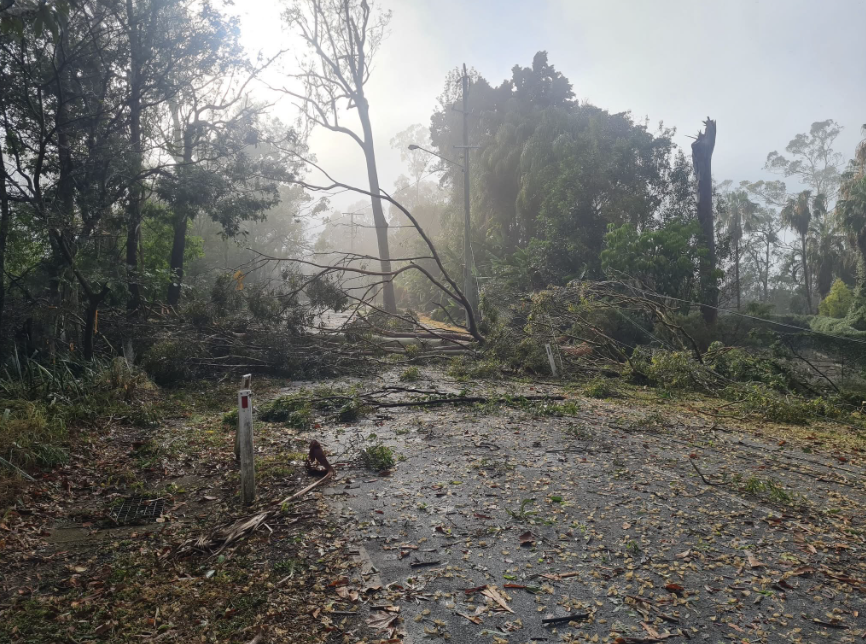
Even so, many locals took matters into their own hands — safely. Roads were littered with branches and tangled wires. Local posts reported Kenmore Road between Sunset Road and Spinkabrae Street was impassable due to fallen trees. Residents warned others on social media to steer clear while waiting for Council crews.

Photo Credit: Mark Williams/4069 Community/Facebook
Photo Credit: Lisa Shaw/4069 Community/Facebook

Good Samaritans Step Forward

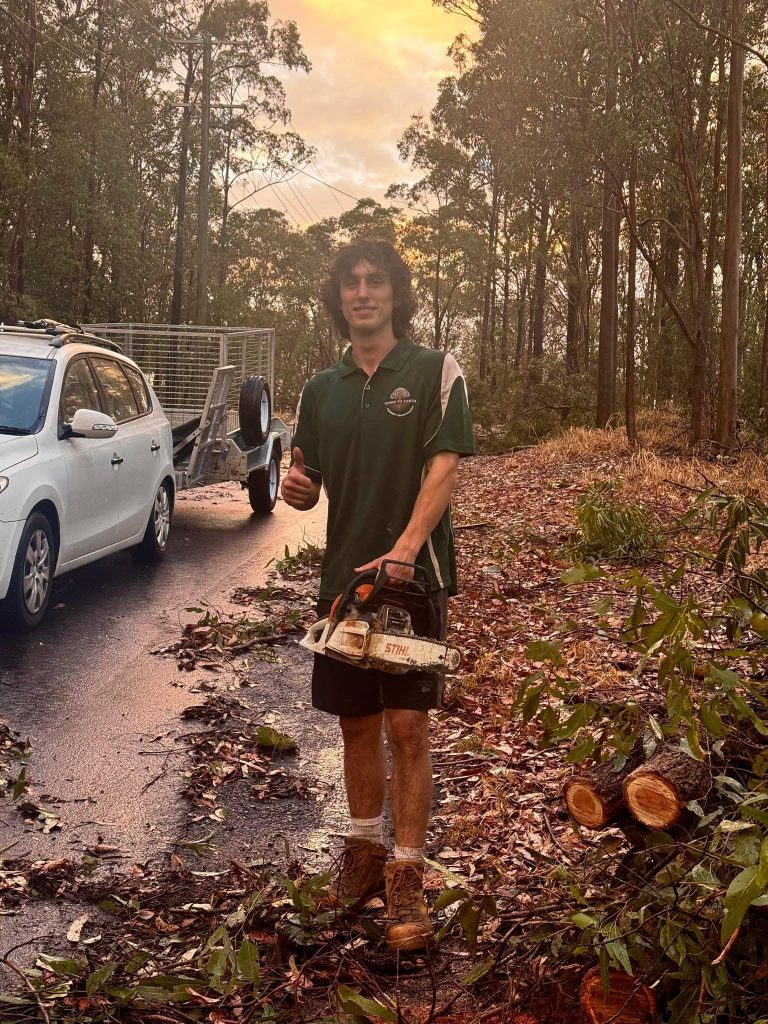
While Energex and SES worked around the clock, the Kenmore community didn’t stand by. Alessio Cooper, a local small-business owner, posted to the 4069 Community Facebook group, offering help to anyone who needed it.

Alessio Copper
Photo Credit: 4069 Community/Facebook

Armed with two chainsaws, a pole saw, and a 4WD, Alessio and his mates Cole and Liam spent the day clearing fallen trees from driveways and roads. “We just want to make sure everyone’s safe,” he wrote — a message that drew strong engagement and comments of gratitude in the group.

For some residents, the help couldn’t come soon enough.

Neighbours Coming Together

Group comments show neighbours offering accommodation and assistance; volunteers reported checking on vulnerable residents. With prolonged outages, some families reported difficulty contacting emergency services. 

In the age of social media, the 4069 Community Facebook group functioned as an impromptu hub for local updates and offers of help. Members shared outage information and local damage photos to warn others. The group became a living record of resilience — people offering tarps, generators, or even just reassurance.

Elsewhere online, a Reddit thread about Kenmore captured the city’s anger after footage appeared to show someone interfering with power lines during the chaos, allegedly worsening the blackout. “You’re literally taught ‘look up and live’,” one commenter wrote. “How he didn’t get 415 volts to the heart is beyond me.”

Across the Western Suburbs

The storm didn’t spare the surrounding suburbs. Hail up to five or six centimetres was reported in parts of the western suburbs, including Pullenvale. In Goodna and Ipswich, fallen trees blocked railway lines and caused significant transport delays.

Widely shared footage showed the storm front sweeping across Brisbane with frequent lightning. The images were hauntingly familiar to those who remembered The Gap Storm of 2008, which destroyed dozens of homes, many of them in the same corridor between Kenmore and Arana Hills.

After the Storm: The Cleanup, the Forecast, and the Heat

Thunderstorms are still possible across Queensland’s central and south east regions this week as a cool change moves through, although Brisbane and the Gold Coast may be spared the worst conditions. Temperatures in Brisbane will climb to around 37°C before dropping sharply to 21°C on Tuesday, while a Bureau of Meteorology heatwave warning remains in place for central and northern parts of the state where highs could reach the mid-40s, prompting total fire bans and heightened bushfire danger until early next week.

Meanwhile, Energex crews continued restorations across affected zones. The outage map showed widespread outages across Brisbane’s west, with staggered restoration times. For some customers, restoration was expected to take longer than a day due to safety and access constraints.

For many, power may not return until midweek. But in true 4069 fashion, the lights of community spirit never dimmed. As the community often proves, when the lights go out, people switch on for each other.


Where to Get Updates and Help

Power and outages: Energex Outage Finder

Emergency assistance: SES (132 500), Triple Zero (000) for life-threatening emergencies

Brisbane City Council Hotline: 3403 8888

School closures: Queensland Government School Alerts

Community updates: 4069 Community Facebook Group

Published 27-Oct-2025

From Koala Refuge to Sustainability Pioneer: A Fig Tree Pocket Icon’s Enduring Legacy

Nearly a century after it was established to save koalas from the fur trade, the historic Lone Pine Koala Sanctuary in Fig Tree Pocket is now being honoured as a leader in modern environmentalism, earning a nomination for a top business award for its trailblazing sustainability practices.


An Honour for a New Generation

The world-renowned sanctuary is a finalist in the 2025 Brisbane Lord Mayor’s Business Awards, a program that highlights organisations building the foundations of the city as it looks toward welcoming the world in 2032. Lone Pine is specifically nominated for the Dentsu Environmental Sustainability in Business Award, placing it among the city’s most forward-thinking enterprises. This recognition celebrates the sanctuary’s evolution from a simple animal refuge into a global model for innovative environmental management.

A Foundation in Conservation

The sanctuary’s deep commitment to wildlife is not a recent development. The institution was originally founded by Claude Reid in 1927 during a grim period when koalas were being culled extensively for the fur trade. Beginning with just two koalas named Jack and Jill, Reid created a safe place for the species. 

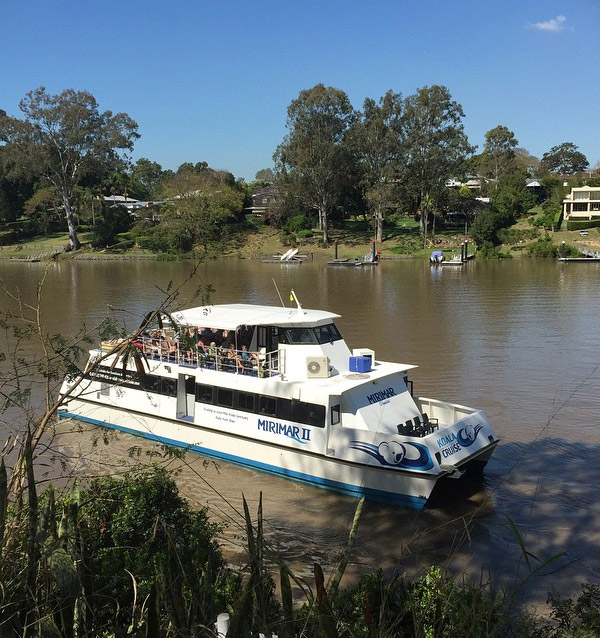
The sanctuary’s name itself is a nod to local history, originating from a single, towering hoop pine planted in 1867. This tree acted as a landmark for visitors arriving by boat along the Brisbane River, mooring at the ‘lone pine’. This long history of conservation has provided the groundwork for the sanctuary’s modern mission.

Pioneering a Sustainable Future

Today, that mission has expanded to address modern environmental challenges with remarkable creativity. The team at Lone Pine has implemented a series of initiatives that set global standards for sustainability. They have developed a closed-loop system for harvesting eucalyptus, ensuring zero waste.

 The property has been made more resilient to drought through advanced water reuse systems, and old materials are regularly upcycled to build new infrastructure like fences and picnic tables. In a particularly creative partnership, the sanctuary provides its unused eucalyptus leaves to local Brisbane distiller BY.ARTISANS, which transforms them into a premium botanical gin, turning a waste product into a celebrated local creation.


A Mission to Inspire

These innovative practices are guided by a clear and enduring philosophy. The sanctuary’s leadership believes that to make people care about the environment, they must first experience it directly. This principle, that connection fosters conservation, is the driving force behind its interactive visitor experiences. 

Internally, the entire team operates by a set of core values summarised as CATER: Communication, Accountability, Teamwork, Education, and Respect. This framework ensures that every aspect of the sanctuary, from animal care to guest services, is aligned with its vision of inspiring communities to live in balance with the natural world, honouring a legacy that began almost 100 years ago.

Published Date 02-October-2025

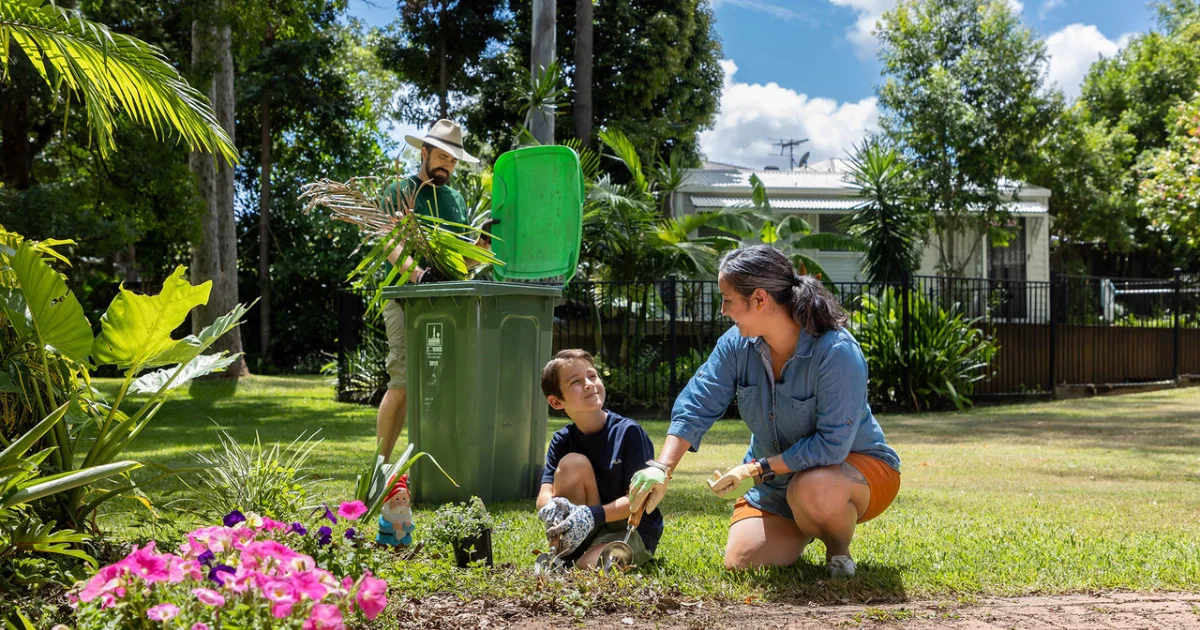
Green Bin Rollout for Kenmore Hills and Surrounds Set for August

Kenmore Hills and the surrounding West Brisbane suburbs can expect to receive green waste recycling bins, with Brisbane confirming the rollout schedule as part of a citywide expansion of its waste collection services.


Read: Chern Now Open in Kenmore, Serving Up Modern Asian Favourites


Eligible standalone homes in Kenmore Hills will receive a new 240-litre green-lidded bin between 18 and 29 August 2025, alongside other suburbs including Fig Tree Pocket and Pullenvale. Once delivered, green waste collection will begin the following fortnight and continue on a fortnightly basis, alternating with yellow lid recycling bins.

WeekDatesSuburbs
Week 14 August to 15 August 2025Wakerley, Chandler, Mackenzie, Bardon, Manly West, Rochedale, Auchenflower, Wynnum, Wynnum West, Manly, Lota
Week 211 August to 22 August 2025Algester, Calamvale, Virginia, Gaythorne, Gordon Park, Acacia Ridge, Archerfield, Nudgee, Nudgee Beach, Northgate, Milton, Kelvin Grove
Week 318 August to 29 August 2025Boondall, Geebung, Grange, Holland Park West, Anstead, Brookfield, Karana Downs, Mount Crosby, Lake Manchester, Chuwar, Moggill, Bellbowrie, Kholo, Pinjarra Hills, Pullenvale, Upper Brookfield, Kenmore Hills, Fig Tree Pocket, Lytton
Week 425 August to 5 September 2025Zillmere, Fortitude Valley, Holland Park, Tarragindi, Moorooka, Annerley, Wavell Heights, Fairfield, Yeerongpilly, Yeronga, Tennyson

The rollout follows Council’s decision to make green waste recycling a core part of household bin services from 1 July 2025, with all eligible homes across Brisbane now set to have three bins: red for general waste, yellow for recyclables, and green for garden waste.

green bins
Photo credit: BCC/Facebook

Council says the initiative will help turn more garden waste into compost instead of landfill. Green waste, like lawn clippings, small branches, and leaves, currently makes up nearly a quarter of what’s in the average red bin.

Over the past year, more than 43,000 tonnes of green waste have been recycled through existing green bins across the city, saving almost $1 million in landfill levy costs. With more than 160,000 new green bins to be delivered by December, Council expects further environmental and economic benefits.

Cr Adrian Schrinner said the rollout would help Brisbane households reduce waste and recycle more effectively. “Every green bin collected means less landfill, more mulch and compost for reuse, and big savings for residents thanks to lower waste levy costs,” he said.


Read: The Beginnings of Collins Estate, the ‘Most Cheerful’ Address in Annerley


Homes that already compost or manage their green waste in other ways can opt out of receiving a bin. However, Council is encouraging participation as a practical way to reduce landfill, cut costs, and support a more sustainable Brisbane. For full suburb delivery dates or to manage your bin preferences, visit the Council’s website.

Published 6-August-2025

Olympic Coach Dean Boxall Lists Fig Tree Pocket Family Home

Olympic swimming coach Dean Boxall, known for his passionate celebration of Ariarne Titmus’s gold medal win, has placed his family home in the Brisbane riverside suburb of Fig Tree Pocket on the market, a place where neighbours became lifelong friends.


The four-bedroom, two-bathroom house on Mandalay Street has been the Boxall family’s residence since shortly after the 2021 Tokyo Olympic Games. The property, situated on a 630-square-metre block, features a recently renovated kitchen designed for modern living and an open-plan layout that blends indoor and outdoor spaces.

Boxall expressed that the community in Fig Tree Pocket is exceptional, highlighting the strong bonds formed with his neighbours.

A Home Filled with Memories

One of the home’s unique features is a “newsroom” located beneath the stairs, a space created by Boxall’s wife to document his career. This room contains news articles, stories, awards, and photographs, including a custom illustration of Boxall in a Batman costume, a character he admires, alongside a photo of his viral Olympic celebration. Boxall stated that he and his wife enjoy spending time in this room, sharing wine and reflecting on his career highlights.

Community and Lifestyle

Dean Boxall
Photo Credit: Real Estate

Real estate agent Chrissie Krummel of Chrissie Krummel Properties highlighted Fig Tree Pocket as a popular family location. She noted the area’s riverside setting and family-friendly atmosphere, where children can enjoy bike riding and fishing. Krummel emphasised the unique lifestyle the area offers, which is difficult to replicate in other parts of Brisbane.


A Move for the Future

Dean Boxall
Photo Credit: Real Estate

Boxall explained that the decision to sell the home was not due to dissatisfaction, but rather a desire to move to another property within the same area, which they intend to use for their retirement.

He said their current home was considered their dream home when they purchased it four years prior, but their needs had evolved. Boxall also commented on the differences between the competitive sporting world and the real estate market, noting the difficulty in assessing potential buyers.

Published Date 01-April-2025

Street Spotlight: Jesmond Rd, Fig Tree Pocket

Jesmond Road in Fig Tree Pocket stands as a testament to the remarkable transformation of Brisbane’s western suburbs over the generations. From its humble beginnings in 1936 when just three properties dotted the landscape, to today’s established community of 148 homes, the street’s evolution mirrors the broader development of Fig Tree Pocket.


The remarkable stability of the neighbourhood is evident in its 95% owner-occupancy rate and impressive average residency of 11 years and 7 months, with nearly half the residents calling Jesmond Road home for over a decade. This sense of permanence is particularly striking when considering historical transactions like 359 Jesmond Road, which changed hands for just $11,500 in November 1971 – a figure that showcases the extraordinary growth in Brisbane’s property market over the past half-century. When viewing aerial photographs from 1936, the contrast between the sparsely populated road of yesterday and today’s thriving residential precinct provides a fascinating glimpse into the area’s development.

Jesmond Rd, Fig Tree Pocket Residents

NUMBER OF PROPERTIES: 42
% OF OWNER OCCUPIERS ON STREET: 75%
AVERAGE TIME FOR OWNER OCCUPIERS: 12 years and 11 months
% OF PEOPLE 10+ YEARS: 56%

Jesmond Rd, Fig Tree Pocket – As It Looked in 1936

Jesmond Rd, Fig Tree Pocket in 1936


SOME RECENT SALES ON JESMOND RD, FIG TREE POCKET

Property AddressSale PriceSale Date
643 Jesmond, Fig Tree Pocket$850,000Sep 2024
14/680 Jesmond, Fig Tree Pocket$873,000Feb 2024

SOME TYPICAL PROPERTY SALES ON JESMOND RD FROM YESTERYEAR

Property AddressSale PriceSale Date
526 Jesmond, Fig Tree Pocket$30,000Feb 1995
622 Jesmond, Fig Tree Pocket$110,500Aug 1987
264 Jesmond, Fig Tree Pocket$162,000Jun 1981
359 Jesmond, Fig Tree Pocket$11,500Nov 1971

SUBURB PROFILE 

The median price of a 4 Bedroom House in Fig Tree Pocket in 2024 was $1,545,000
The median price of a 4 Bedroom House in Fig Tree Pocket in 2020 was $1,071,000
TYPICAL INCREASE OF A 4 BEDROOM HOUSE IN FIG TREE POCKET SINCE 2020 : $474,000

The median price of a 5 Bedroom House in Fig Tree Pocket in 2024 was $2,270,000
The median price of a 5 Bedroom House in Fig Tree Pocket in 2020 was $1,625,000
TYPICAL INCREASE OF A 5 BEDROOM HOUSE IN FIG TREE POCKET SINCE 2020 : $645,000


If you know Jesmond Rd, Fig Tree Pocket well and you have some anecdotes or details to add, please email us at editor@brisbanesuburbsonlinenews.com.au.

Clive Palmer Expands Footprint in Fig Tree Pocket

Mining magnate Clive Palmer has significantly expanded his presence in Fig Tree Pocket. The 70-year-old businessman has amassed a sprawling compound now estimated to be worth up to $60 million.


Palmer’s property holdings in Fig Tree Pocket now stretch across nearly half a kilometre of Brisbane River frontage. Since the pandemic began, he has tripled his footprint in the area, now owning seven titles that collectively form one of the largest private landholdings in the suburb.

Clive Palmer started his spree with this Fig Tree Pocket home in 2018.
Photo Credit: Ray White New Farm

The foundation of Palmer’s Fig Tree Pocket estate is the former property of Peter Bond, which he acquired in 2018 for $7.5 million, a significant discount from its original $12 million listing price. This 1.26-hectare property marked the beginning of Palmer’s expansion in the area.

Mr. Palmer purchased a neighbouring property in 2020.
Photo Credit: Facebook / Jason Adcock-Adcock Prestige

In 2020, Palmer acquired two neighbouring properties, each priced at $5 million. These acquisitions, made through his company Closeridge and in his own name, secured him control of the left side of the street leading to the Brisbane River.

The extensive river frontage of Palmer’s compound provides him with the unique opportunity to anchor his superyacht, “Australia,” adjacent to his residence.

Among Palmer’s neighbours in Fig Tree Pocket are his son Michael, who owns a nearby property, and Queensland tech entrepreneur Bevan Slattery, founder of NextDC and Megaport, who resides next door on the riverfront.


This significant investment in Fig Tree Pocket real estate comes as Palmer awaits a decision from an international court regarding its jurisdiction to hear his case against the Commonwealth.

Published 24-September-2024

Lone Pine Sanctuary Supports Efforts to Save Koalas as Grim Survival Statistics Emerge

New research shows a disturbing statistic on koalas being lost to accidents and disease. Lone Pine Koala Sanctuary in Fig Tree Pocket helps rehabilitate as many as it can, but data shows thousands are being admitted to wildlife hospitals every year.


Research published in Society and Animals on 4 September 2024 shows that over a 22-year period, 50,858 koalas were admitted to wildlife hospitals, and the majority had to be put down despite the best efforts of veterinarians and carers. The research highlights habitat loss, car strikes, and chlamydia as the leading causes of admission.

Euthanasia: The Most Common Outcome

The data shows that only 25% of koalas admitted to veterinary hospitals were released back into suitable habitats, with euthanasia being the most common outcome. PhD candidate Renae Charalambous, from the University of Queensland, explained that diseases like chlamydia accounted for nearly 30% of hospital admissions, followed by injuries from motor vehicle accidents and dog attacks. 

Koalas hit by cars were four times more likely to be found dead than treated and released, and those who did make it to the hospital were three times more likely to be euthanised than saved.

Adult koalas and females were particularly vulnerable, with chlamydia being a key factor in the decision to euthanise many of the admitted animals. The statistics present a bleak picture for the survival of koalas in Queensland, with researchers emphasising the importance of addressing these threats through conservation efforts.

Vaccination as a Ray of Hope

In a related study, koalas monitored in the Moreton Bay region were part of a 10-year vaccination program targeting chlamydia, a significant threat to the species. The research demonstrated that vaccinated koalas had a 64% reduction in chlamydial-related deaths compared to unvaccinated koalas. Lone Pine Sanctuary, along with other wildlife organisations, supported these trials, offering crucial help in managing the health of local koala populations.

Lone Pine Sanctuary Koala
Photo Credit: Ellicia/Unsplash

Vaccinated koalas not only showed lower disease incidence but also increased survival rates, particularly during their breeding years. Researchers emphasised that while vaccination alone cannot solve the issue, it is a critical tool when combined with other strategies like habitat protection and road safety improvements.

Future Conservation Efforts

With koalas officially listed as endangered in Queensland in 2022, researchers like Ms Charalambous stress the need for a holistic approach to conservation. She believes that while the survival odds for koalas are grim, there is still time to reverse the decline if conservation policies target the main threats. 

“It’s not too late to restore the region’s healthy koala populations and this is a great opportunity to holistically address and minimise the threats they face,” Ms Charalambous said.

“I hope this research sheds light on policy gaps so decision makers can target intervention strategies to save the koalas we have left.”


Lone Pine Sanctuary continues to be a key partner in these efforts, helping to rehabilitate koalas affected by disease and injury. The centre’s involvement and contributions from veterinary hospitals and other wildlife centres highlight the importance of community-focused conservation strategies.

Published 12-Sept-2024

Fig Tree Pocket Development Faces Backlash as Locals Push Back with Objections

A proposed development to reconfigure one lot at the corner of Jesmond Rd and Cubberla St into five separate lots is facing significant backlash from Fig Tree Pocket locals who are citing concerns over the potential impact on the suburb’s “unique rural character.”


The Proposal

The Development Application (A006403679), lodged by Hayden Forrester in November 2023, seeks to subdivide the land on the corner of 571 Jesmond Road and 68 Cubberla Street. The proposal also includes plans to donate a portion of the land to Fig Tree Pocket State School to expand its grounds. 

According to the town planning report, the development is intended to address population pressures and provide additional housing options in the area, which has seen high demand due to its proximity to quality schools and Brisbane’s CBD.

The application details that the proposed subdivision is “timely, given the current population pressures evident across greater Brisbane.” The report further argues that the new lots will offer “well-located housing and maximise land use efficiency whilst maintaining a configuration that is highly sympathetic to the character of Fig Tree Pocket.”

The site is currently zoned as “Rural,” which typically restricts development to agricultural or large, rural homes. However, the report argues that the site’s characteristics do not align with typical rural land, making it more suitable for residential use. The surrounding area includes residential zones, a school, and some community facilities, supporting the rezoning argument.

The application’s public notification period ran from 8 July to 29 July 2024, during which time local residents were invited to submit their feedback on the proposal.

571 Jesmond Road 68 Cubberla Street Fig Tree Pocket
Photo Credit: Development Application A006403679

Opposition and Concerns

The DA received 62 responses from the public. Out of these, 24 people supported the proposal, while 38 were against it. 

The people who opposed the proposal had several concerns:

  • They worried that the development would harm the rural (country-like) feel of the area.
  • They feared it could lead to more developments in rural areas, setting a bad example.
  • They were concerned about increased traffic and parking problems.
  • They were worried about possible flooding.
  • They questioned the idea of giving one of the lots to the school, especially since that lot might be prone to flooding.

A detailed letter opposing the development outlined several specific concerns, including the potential increase in traffic along Jesmond Road, Fig Tree Pocket Road, and other local streets.

The local warned that the development could exacerbate congestion, particularly at the intersection of Jesmond Road and Cubberla Street, which is already a “dangerous place for school children” during peak times. The letter also raised environmental concerns, noting that the development could displace local wildlife, such as birds, frogs, and echidnas, which are known to inhabit the area. 

“Development of 571 Jesmond Road specifically will likely be inconsistent with the ‘rural’ intent for that part of Fig Tree Pocket.”

571 Jesmond Road 68 Cubberla Street Fig Tree Pocket
Photo Credit: Development Application A006403679

Community Support

Some residents have expressed strong support for the subdivision, viewing it as a necessary step to address the area’s housing shortage. One couple who frequently travels to Fig Tree Pocket submitted a letter backing the development. 

“Given the three excellent schools in Fig Tree Pocket, this subdivision would go some way towards alleviating these pressures by providing additional, well-located housing options,” they wrote. The couple, who live in Oxley but have a child attending a school in Fig Tree Pocket, highlighted the limited housing availability in the area, noting that many families like theirs are eager to move closer to the schools.

They also praised the proposal to donate land to the state school as a generous act that would benefit the school community. 

“We believe the proposed dedication of land to the state school to enable an expansion to their grounds is a generous offer and should deliver significant benefits to that school community,” they stated. Their support is grounded in the belief that the development will serve a community need by offering more housing opportunities while also enhancing local educational facilities.


Brisbane City Council is currently reviewing the application, with a decision expected soon. The proposal has already completed all public notification requirements, and the next steps will involve the council assessing the merits and concerns raised during the community consultation period.

Published 2-Aug-2024

End of an Era: No More Koala Cuddles at Lone Pine Sanctuary

For decades, famous people like One Direction, Janet Jackson, Roger Federer, and Pope John Paul II have visited the Lone Pine Koala Sanctuary in Fig Tree Pocket for a hands-on encounter with its famed koalas. Effective immediately, however, the wildlife facility has decided to put an end to koala holds and transition to more educational wildlife encounters.


Responding to visitor feedback calling for more in-depth and educational interactions with the wildlife, Lone Pine Koala Sanctuary has ended koala holds as of 1 July 2024 and  is set to introduce a new “Koala Close-Up” experience starting 1 September 1 2024. This initiative aims to allow guests to spend more time observing koalas in their natural behaviours, focusing on education over physical interaction.

“Our visitors are increasingly seeking experiences where they can observe our wildlife naturally, without direct contact,” said Lyndon Discombe, the sanctuary’s general manager. “This shift allows us to meet those expectations while fostering a deeper appreciation for koalas and their natural habits.”

Lone Pine Sanctuary
Photo Credit: Supplied

Enhanced Educational Programs

The sanctuary will continue to offer “Koala Moments” and the “Koala Discovery Tour,” designed to educate visitors on koala behaviour, ecology, and care. These programs are tailored to ensure that all interactions are respectful and educational, enhancing visitors’ understanding and appreciation of the species.

“We aim to inspire respect and love for koalas by allowing our guests to see them up close in their natural environment,” added Mr Discombe.

Lone Pine Sanctuary
Photo Credit: Supplied

The Zoo & Aquarium Association (ZAA) Australasia supports Lone Pine’s new educational direction, emphasizing that it aligns with conservation education goals and the need for meaningful wildlife experiences.

Adhering to the highest animal welfare standards, Lone Pine’s interactions are guided by the Australian Animal Welfare Standards and the ZAA’s guidelines, ensuring all wildlife presentations are respectful and beneficial to both animals and visitors.

Famous Koala Cuddles

Historical Significance and Future Directions

Since opening in 1927, Lone Pine Koala Sanctuary has grown into a global icon for wildlife conservation. The sanctuary continues to evolve, adding facilities like the Brisbane Koala Science Institute and a nocturnal precinct to enhance educational offerings and conservation efforts.

As Lone Pine Koala Sanctuary phases out koala holds, it reinforces its commitment to providing enriching educational experiences that foster deeper connections between visitors and wildlife. This marks a new chapter in the sanctuary’s history, continuing to be a leading institution in wildlife conservation and education.


Visitors can find more information or book experiences by visiting the sanctuary’s website or exploring the facility at 708 Jesmond Road, Fig Tree Pocket.