
Our Homes Have Changed. Have Our Fire Safety Habits Kept Up?

By Cathy Brand | Fire Safety Advocate and CEO of Brooks Australia

A spare bedroom becomes a home office. The garage fills with tools, sports equipment and rechargeable devices. A kitchen that once had a kettle and toaster now has several appliances competing for bench space and power points.

Homes have always evolved around the people living in them, but I wonder how often we stop to consider whether our fire safety habits have kept pace.

As Queensland heads towards summer, households are preparing for warmer days, school holidays and more time spent entertaining at home. Air conditioners, fans, kitchen appliances and rechargeable devices are all part of everyday life, often operating alongside equipment we’ve accumulated over the years.

None of these conveniences is inherently unsafe, but as our routines change, so can the risks within our homes. Fire safety needs to reflect the way we actually live, rather than becoming something we consider only when installing smoke alarms or responding to new legislation.

When Familiar Routines Create Risks

Most household fire hazards don’t announce themselves. They can develop gradually through habits we’ve followed for years without incident.

Cooking is one example. A phone call, a child needing attention or a quick trip outside can be enough to distract us from something on the stove. Unattended cooking is a preventable fire risk, and staying in the kitchen while food is cooking is one of the simplest precautions we can take.

With summer approaching, outdoor entertaining and barbecues become part of many Queensland households’ routines. Keeping barbecues clean, checking equipment before use and ensuring they’re operated safely outdoors are sensible precautions, particularly when gatherings become busy.

Our increasing reliance on electrical and rechargeable devices also deserves attention.

Lithium-ion batteries are now found in everything from phones and laptops to power tools, e-bikes and e-scooters. Electric vehicles are also becoming more common, bringing home charging into the picture. Although the risks vary considerably between products, damaged batteries, unsuitable chargers and unsafe charging arrangements can create fire hazards.

For smaller rechargeable devices, it’s worth using suitable chargers, following the manufacturer’s instructions and keeping charging equipment away from combustible materials and escape routes. A battery showing signs of swelling, damage or unusual overheating should not continue to be used or charged.

Electric vehicles have different charging requirements. Home charging equipment should be appropriate for the vehicle, with any required electrical installation work undertaken by a licensed electrician.

The point isn’t to become anxious about the technology in our homes. It’s to recognise that new conveniences sometimes call for new precautions.

HOME FIRE SAFETY | QUEENSLAND

What Recent House Fire Claims Reveal

RACQ Insurance reported the following figures for house fire claims received during 2024–2025.

469
House fire claims received
146
Claims attributed to mechanical or electrical faults
42
Claims involving cooking appliances
16
Claims involving gas barbecues

Source: RACQ Insurance, 16 July 2026. Figures relate to RACQ Insurance claims, not all house fires in Queensland.

HOME FIRE SAFETY | BRISBANE INCIDENTS

Four Brisbane Fires, Four Reminders About Household Safety

Recent incidents show how quickly a fire can spread through an ordinary home — and why everyday precautions and early warning matter.

Bridgeman Downs | 6 November 2026

A home on Montalcino Place was extensively damaged by fire. Initial reports suggested a barbecue in the garage may have been involved, although the cause had not been conclusively established.

Ashgrove | 7 November 2026

Fire destroyed a two-storey home on Glenlyon Drive after reportedly spreading from the garage. Part of the roof collapsed. The ignition source remained unconfirmed.

Sherwood | 9 May 2026

A two-storey home was gutted in a fire that authorities believed began with a barbecue left switched on. The family was outside when the blaze broke out.

Inala | 24 June 2025

A fire reportedly started in the kitchen of a Rosemary Street share house. Ten occupants escaped, but the property was severely damaged. Firefighters reported there were no working smoke alarms.

The takeaway

Not every household fire has the same cause, and not every ignition source can be identified. Safe cooking and barbecue practices, attention to appliances and working, interconnected smoke alarms all form part of protecting a household.

The Changes We Don’t Always Notice

When people think about improving home fire safety, they sometimes imagine major electrical work or expensive renovations. In reality, many worthwhile improvements are much simpler.

A hallway that has gradually become a storage area may now be difficult to navigate in an emergency. Furniture that seemed perfectly placed a few years ago might obstruct a doorway. Boxes stored beside electrical equipment or belongings piled around power points can introduce avoidable hazards.

I encourage families to look at their homes with fresh eyes, particularly the routes they would need to use if they had to leave quickly.

It’s also worth considering how the people living there have changed.

Children grow older and become more independent. An ageing parent may move into the household. Someone recovering from surgery might temporarily have difficulty walking, while another family member may develop hearing or memory difficulties.

I often compare this with fall prevention. As someone’s mobility changes, families think about removing trip hazards, improving access or making other practical adjustments. We should be just as willing to reassess their fire safety.

A home that was suitable for everyone five years ago may need a different approach today.


READ ALSO: The Deadline Is Coming: Is Your Home Ready for Queensland’s Smoke Alarm Rules?

An Escape Plan That Works in Real Life

One of the most important questions a household can ask is whether everyone would know what to do if a fire occurred.

Having smoke alarms is essential, but an early warning is only useful if people can recognise it and respond.

A household escape plan should identify safe ways out, establish an outdoor meeting place and be practised regularly. Where possible, families should consider two escape routes, bearing in mind that smoke or flames may make a familiar doorway unusable.

For young children, practising the plan helps make the instructions familiar. For someone with reduced mobility or other support needs, the household may need to consider what assistance would be required and who could safely provide it.

We shouldn’t assume that hearing an alarm automatically means someone will know what to do, particularly if they become confused or disoriented under stress.

Once everyone is safely outside, they should remain outside and call Triple Zero (000). Nobody should re-enter a burning building to retrieve belongings.

These conversations are easier to have before an emergency, when there’s time to think clearly about what each person might need.

A Fresh Look at the Home We Live In

Queensland’s approaching smoke alarm deadline is an important reminder to check whether our homes meet the required standards. But compliance is only one part of protecting a household.

The everyday decisions we make about cooking, charging equipment, maintaining electrical appliances and keeping exits clear matter as well. So does recognising when a family member’s circumstances have changed enough to warrant a different escape plan.

At Brooks, our Home Fire Safety Checklist brings together many of these practical measures because fire prevention doesn’t always begin with major changes. Often, it begins with noticing something we’ve grown accustomed to overlooking.

Perhaps the most useful place to start is to walk through your home and consider how differently you use it today compared with a few years ago.

The house may look much the same from the street, but the people, appliances and routines inside it may have changed considerably. Our approach to fire safety should reflect that.

Cathy Brand, CEO of Brooks Australia

About Cathy Brand

Cathy Brand is the Chief Executive Officer of Brooks Australia, a provider of fire detection and warning technology. Through her work in the fire safety industry, she advocates for greater awareness of residential fire protection, interconnected smoke alarm systems and solutions that consider the needs of different households.

Home Fire Safety with Cathy Brand is a five-part sponsored editorial series presented in partnership with Brooks Australia.

Still Missing: Fig Tree Pocket Sanctuary Asks Locals to Look and Listen for Kestrel Sparrow

Weeks of searching by land, river and air haven’t brought Sparrow, a Nankeen kestrel from Lone Pine Koala Sanctuary in Fig Tree Pocket, home, and her handlers now need Brisbane locals to find her.


Still Out There

Sparrow flew off in late September while Lone Pine’s Raptor Team was running a training session, and she hasn’t come home. A post published nine days after she left said the search was continuing. Brisbane Times reported that she is about the size of a lorikeet, which makes her easy to miss against the sky.

Searching From the Hills, the River and the Air

The team has covered plenty of ground. According to Lone Pine’s posts, handlers have hunted for her tracking signal across Greater Brisbane from high vantage points, from a boat on the Brisbane River and from a helicopter.

So why hasn’t the signal led them to her? Range is part of the answer. It depends on the surroundings, and Lone Pine said Sparrow may have travelled beyond the distance the tracker can reach. In a Sept. 28 update, the sanctuary said the battery was now expected to have run out.

What to Look and Listen For

Sparrow
Photo Credit: Lone Pine Koala Sanctuary/ Facebook

A glance at the sky may not be enough, so Lone Pine has pointed to her gear. Sparrow wears falconry anklets and jesses, which are small straps on her legs, and a small tracker is attached to her leg. The sanctuary has shared photos and videos of the equipment, along with a recording of her call.

If You Think You’ve Seen Her

Don’t try to get close. Lone Pine asks that nobody approach or catch her. If you spot a bird that fits the description, note where you saw it and what time, and snap a photo if you can.

Then call. The sanctuary’s team takes calls on (07) 3378 1366 from 9 a.m. to 5 p.m. After hours, the number is 0437 876 759, which also takes text messages. Social media comments and direct messages are a poor way to report a sighting, the team said, because they may not be read right away.


A Job for the Whole Neighbourhood

Lone Pine thanked everyone who has shared its posts and phoned in possible sightings. It is asking walkers and others spending time outdoors to keep looking up and listening. The sanctuary said the more people watching and listening, the better the chance of bringing Sparrow home safely.

Published Date 14-October-2026

Photo Credit: Lone Pine Koala Sanctuary/ Facebook

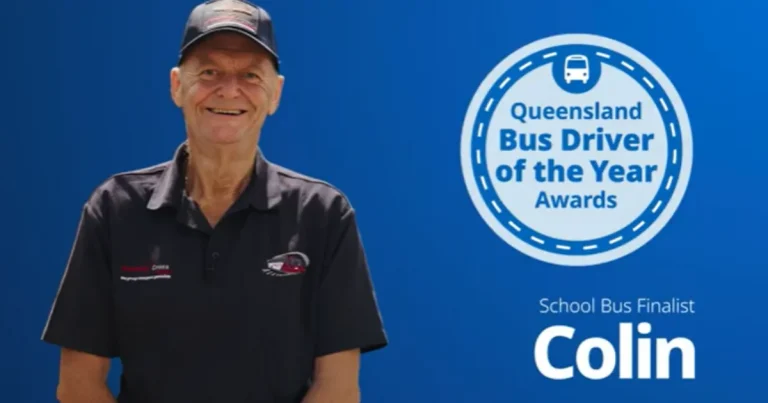
Moggill’s Colin Hobson Takes Home Queensland School Bus Driver of the Year

Moggill resident Colin Hobson has been named Queensland School Bus Driver of the Year for 2025, winning the title at the Queensland Bus Industry Council’s Annual Gala Dinner and Awards Night after a statewide public vote backed him ahead of two other finalists.


Colin drives the semi-rural S60 route for Southern Cross Transit, clocking around 160 kilometres a day between Chuwar and Indooroopilly, and the community he has built on that bus run was clearly paying attention during voting. The win comes after he was selected as a finalist from a pool of more than 1,300 nominations received across Queensland, making the final result all the more significant.

For Kenmore and Moggill locals who know Colin well, the recognition comes as no surprise. His approach has been described as an unwavering focus on providing good customer service, a quality that set him apart from the moment the nomination was announced.

From the Snowy Mountains to Brisbane’s Western School Run

What many local residents may not know is that Colin’s path to west Brisbane’s school bus network took a long detour through the Snowy Mountains, where he spent 25 years before returning to his Queensland roots. Back in Brisbane, he and his wife Tamara built a presence in the local café scene that made them familiar faces long before the school run did.

The couple ran Moccabella Café at Bellbowrie Plaza and One Table Cafe at Kenmore Hills for many years, earning a loyal following among the bayside community before stepping back from small business life.

Colin Hobson named as School Bus Diver of the Year 2025
Photo Credit: YouTube/TranslinkQLD

The transition from hospitality to school bus driving might seem unexpected from the outside, but the thread running through both chapters is the same: a genuine orientation toward the people in front of him. For Colin, the S60 route is more than a timetable, it is a daily commitment to around 160 kilometres of safe, calm and enjoyable travel for students, some of whom face nearly two hours each way on that run.

A Bus That Became a Community

Translink‘s own description of Colin ahead of the finalist announcement captured what students and parents had been saying in their nominations: he has built a whole community on his west Brisbane school bus. Fridays have become a fixture, with music trivia and sing-alongs a regular part of the routine, and no student’s birthday passes without the whole bus joining in. Those details speak to something deliberate rather than incidental, a driver who has thought carefully about what the journey means to the people making it every day.

The Queensland Bus Driver of the Year Awards, now in their seventh year, are run by Translink in partnership with the Queensland bus industry to recognise drivers across three categories: South East Queensland Bus Driver of the Year, Regional Bus Driver of the Year and School Bus Driver of the Year. The 2025 School Bus category was contested against finalists from Mackay and Townsville, with the winner determined by public vote from the nine finalists selected across all categories.

Colin’s win is a reminder that the quieter parts of Brisbane’s transport network, the long semi-rural runs that stitch outer suburbs to the city, are held together by people who show up with care every single day.


Published 20-April-2026

Lone Pine Koala Sanctuary Launches After-Dark Corporate Experience From Its Fig Tree Pocket Home

Lone Pine Koala Sanctuary at 708 Jesmond Road, Fig Tree Pocket has launched a new Twilight Koala Experience, an exclusive after-hours wildlife encounter designed specifically for corporate groups, incentive programs and private functions of up to 100 guests. While the evening offering focuses on this intimate scale, the sanctuary has also expanded its daytime capacity to accommodate significantly larger delegations within standard operating hours.


The new offering adds an evening dimension to one of Brisbane’s most iconic destinations, giving corporate visitors a guided koala encounter led by the sanctuary’s wildlife team after the regular day visitors have gone home. Groups can also include an after-dark wildlife tour of the sanctuary’s nocturnal precinct, drinks and dinner at the Riverside Café overlooking the Brisbane River, and the option of arriving by river cruise rather than road, a touch that taps into the sanctuary’s long history as a river destination that dates back nearly a century.

For Kenmore and Fig Tree Pocket residents, the development is a reminder of just how significant their local landmark is on the broader tourism and events map, and how it continues to evolve nearly a hundred years after it first opened.

A Heritage Site With a New Chapter

Lone Pine Koala Sanctuary opened in 1927 as a refuge for sick, injured and orphaned koalas at a time when the species was being killed for its fur, founded by conservationist Claude Reid with just two koalas named Jack and Jill. The sanctuary’s name comes from a solitary hoop pine planted by the Clarkson family on the original 4.6-hectare site, and the complex has grown through amalgamated land purchases to its current 18 hectares along the northern bank of the Brisbane River.

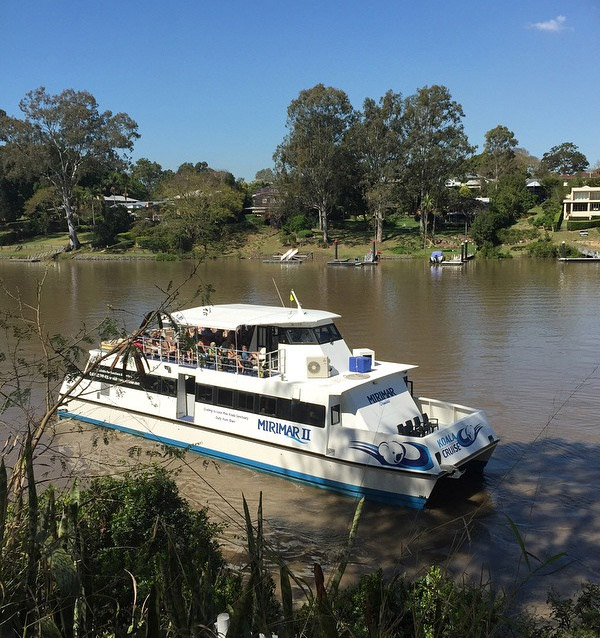
Cruise to Lone Pine Koala Sanctuary
Photo Credit: Koala and River Cruises

From its earliest days, the sanctuary was marketed as a river destination, promoted as “the most beautiful trip in Australia” at a time when Brisbane families were discovering the leisure possibilities of the motor car. That river connection has never been lost. The Mirimar river cruise has been ferrying passengers from South Bank to Lone Pine for more than 70 years, and the new corporate offering explicitly includes arrival by river as a premium option, connecting modern corporate guests to the same scenic journey that Brisbane families have taken across generations.

During the Second World War, Lone Pine gained international recognition when American servicemen stationed in Brisbane visited the sanctuary to see native Australian wildlife, including a famous visit from General Douglas MacArthur’s wife, Jean. Today it holds Guinness World Records recognition as the world’s first and largest koala sanctuary, housing over 100 koalas and more than 70 species of native Australian wildlife across its riverside bushland setting.

What the Twilight Koala Experience Offers Corporate Groups

The Twilight Koala Experience was developed in direct response to Brisbane’s growing corporate events sector and the increasing appetite for premium, after-hours experiences that feel uniquely Australian. The guided koala encounter is led by the sanctuary’s wildlife team, giving guests close contact with the animals alongside education about koala conservation and Lone Pine’s ongoing commitment to wildlife protection.

The corporate package is designed as a complete event solution, combining the wildlife encounter with dining at the Riverside Café, the option of a full after-dark tour of the nocturnal precinct where Tasmanian devils, wombats, echidnas and small macropods can be observed in their natural evening behaviours, and arrival by river cruise from South Bank’s Cultural Centre Wharf. The setting, just 12 kilometres from Brisbane’s CBD, makes Lone Pine accessible for conference delegates and incentive groups without the logistics of a long transfer.

Beyond the new twilight offering, Lone Pine is also expanding its daytime corporate and incentive programmes, enabling the sanctuary to host significantly larger groups within standard operating hours. General manager Lyndon Discombe noted that corporate groups are no longer seeking standard event venues but meaningful experiences that create purpose and connection, and that the daytime expansion provides flexibility for conference organisers seeking scale and accessibility in a single venue.

Plan Your Visit

Lone Pine Koala Sanctuary is located at 708 Jesmond Road, Fig Tree Pocket, approximately 12 kilometres from Brisbane’s CBD. The sanctuary is open every day from 9am to 5pm for general visitors. The Mirimar river cruise departs from Cultural Centre Wharf at South Bank at 10am daily, arriving at Lone Pine approximately 75 minutes later, with the return journey departing at 1.30pm.

Corporate event enquiries and bookings can be made through their website. General admission tickets and wildlife encounter bookings are available here. The sanctuary can also be reached directly on (07) 3378 1366.


Published 26-February-2026.

Israel Folau Buys Pullenvale Acreage Amid QRL Bid

Former NRL star Israel Folau has recently bought a Pullenvale acreage, amidst his bid to play to the Queensland Rugby League (QRL) but only if he’s released from his contract with the U.K. Super League club Catalans Dragons.


Per realestate.com.au, Mr Folau and his wife, Maria, a former netball star, bought a four-hectare tract of land in the affluent west Brisbane suburb for $1.5 million. The land has a modest 1970s cottage with three bedrooms and 

Described as a private escape, the property in Grandview Road, which is about 15 kilometres away from Brisbane CBD, sits next to heaps of multimillion-dollar homes and was once part of the estate of mining magnate Nathan Tinkler. The block has the potential for the new owners to build their dream lifestyle.

Mr Folau has a significant property portfolio in Sydney as well and recently listed a building block in Austral, southwest of the CBD, which he bought in 2016 as an investment. 

Photo Credit: Wikimedia Commons

The news of his Pullenvale investment comes as Mr Folau’s bid to join the St George-Illawarra Dragons was rejected in February 2021. However, Chairman Peter V’Landys said that they will not interfere if the sports star signs with the Queensland Cup. 

Insiders said that this is his backdoor strategy in case the NRL would change its decision. Some 69 percent of NRL fans support Mr Folau’s return in a survey from the Australian Christian Lobby. 


In 2019, Rugby Australia sacked Mr Folau over his social media post, encouraging homosexuals to repent and lumping them with drunks, thieves, adulterers, and atheists. The sportsman sued Rugby Australia and received a generous settlement.

Bruce Hatcher, the chairman of the Queensland rugby league said there is “no legal impediment” for Israel Folau to play for the Queensland Cup. 

Mr Folau announced in mid-May 2021 that he’s signing with Gold Coast’s Southport Tigers. QRL officials said that they will welcome his return if he’s released from his Super League contract and abide by a few strict restrictions.

Catalans Dragons said that they still expect Mr Folau to return to France later this year after his compassionate leave to Australia. Reports cited they have no idea about his deal with Southport Tigers.

Meeting Called in Brookfield as 24 Suburbs Outraged Over New Runway

24 different suburbs have reported incredible levels of noise caused by aircraft following the opening of Brisbane Airport’s second runway in July, 2020. In Brookfield, a community meeting has been called to discuss the issue.

Over the past several weeks beginning in late 2020, the Brisbane Flight Path Community Alliance (BFPCA), a group that brings communities negatively affected by Brisbane Airport’s flight paths, collected a total of 2000 responses from the Brisbane public over Christmas complaining about the noise, which exceeded the number of responses about environmental concerns brought about by the runway. 

With the runway built over residential areas, it was only natural for thousands of angry locals to complain. The new runway has led to an uneven distribution of flight paths, with 75% of night operations taking place over the bay, much to the chagrin of suburbs in Southeast Brisbane.

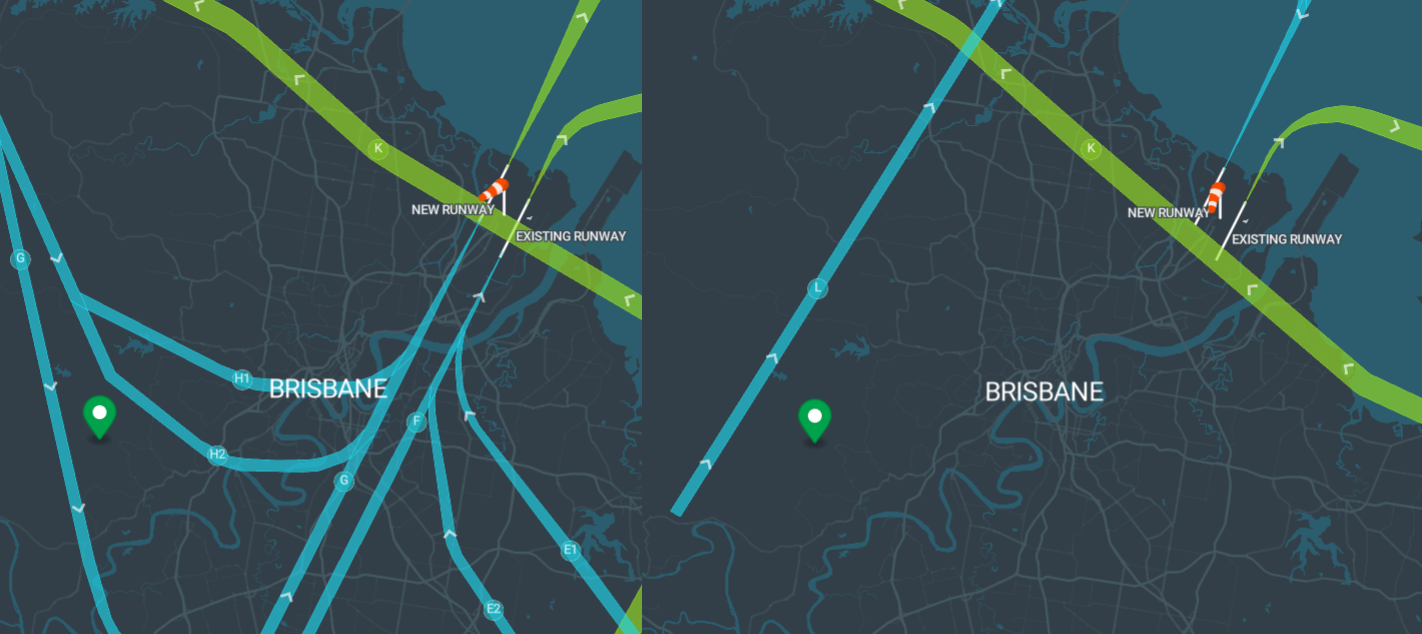
Summer flight paths of the new runway of Brisbane. Left depicts morning flight paths in northerly winds. Right depicts overnight flight paths in calm weather. The marker represents Brookfield.
Photo credit: BNF Flight Path Tool


According to the BFPCA, the population density of the 24 suburbs affected have increased by 40% in the past 15 years. Thousands of families are having difficulty sleeping, concentrating or relaxing, and with new flight patterns brought about by the second runway, property values are decreasing due to the noise. 

An investigation staged by the Aircraft Noise Ombudsman is currently underway, and the BFPCA is set to submit a major report as part of the investigation in the next few weeks to help put an end to noise pollution brought about by aircraft. To address these issues, the BFPCA has organised numerous public meetings, with one scheduled for Brookfield on the 11th of March, 2021. 

The March 11 community meeting hosted by the BFPCA will be held at the Upper Brookfield Community Hall at 6:30PM. Additional details can be found on their Facebook event page.