



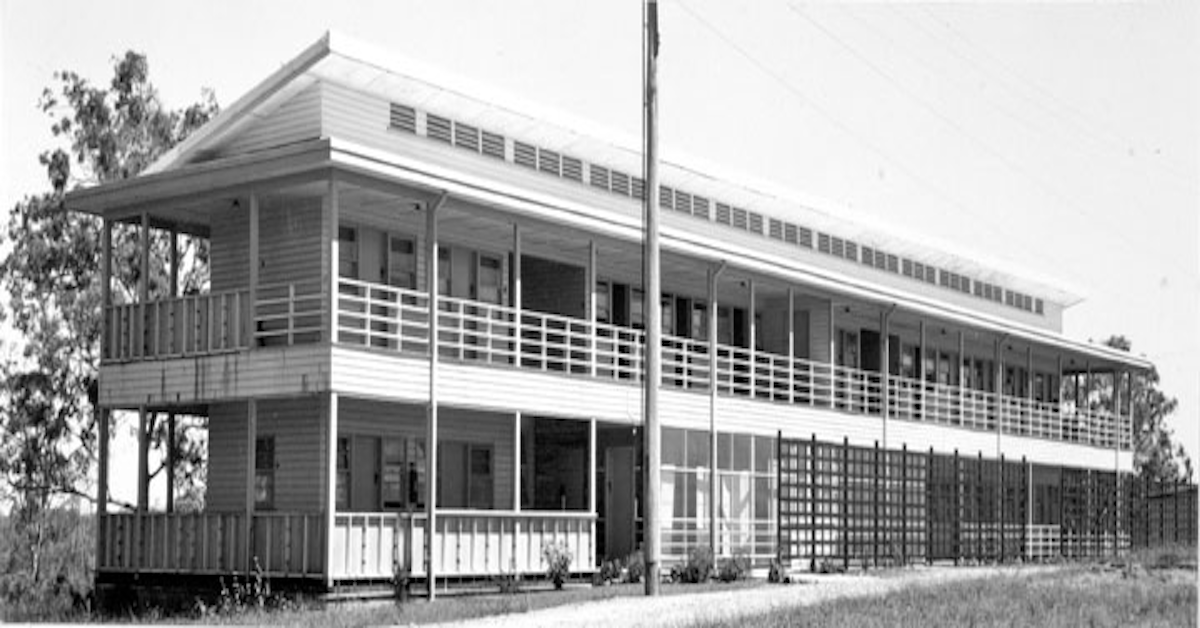
Each day, motorists travel along Moggill Road past Bolton Clarke’s Fairview aged-care community at Pinjarra Hills. Few realise they are passing a site with almost half a century of military and medical history. Long before aged care arrived, this 43-acre ridge was home to the Kenmore Tuberculosis Sanatorium, a wartime medical facility constructed during the Second World War.
Opened in 1945, it cared for generations of returned servicemen and veterans before its doors closed for the last time on 24 April 1994. The hospital buildings were demolished afterwards.


Though the hospital itself is gone, the site tells a compelling story of wartime necessity, medical change and a local identity that endured long after the original buildings disappeared.
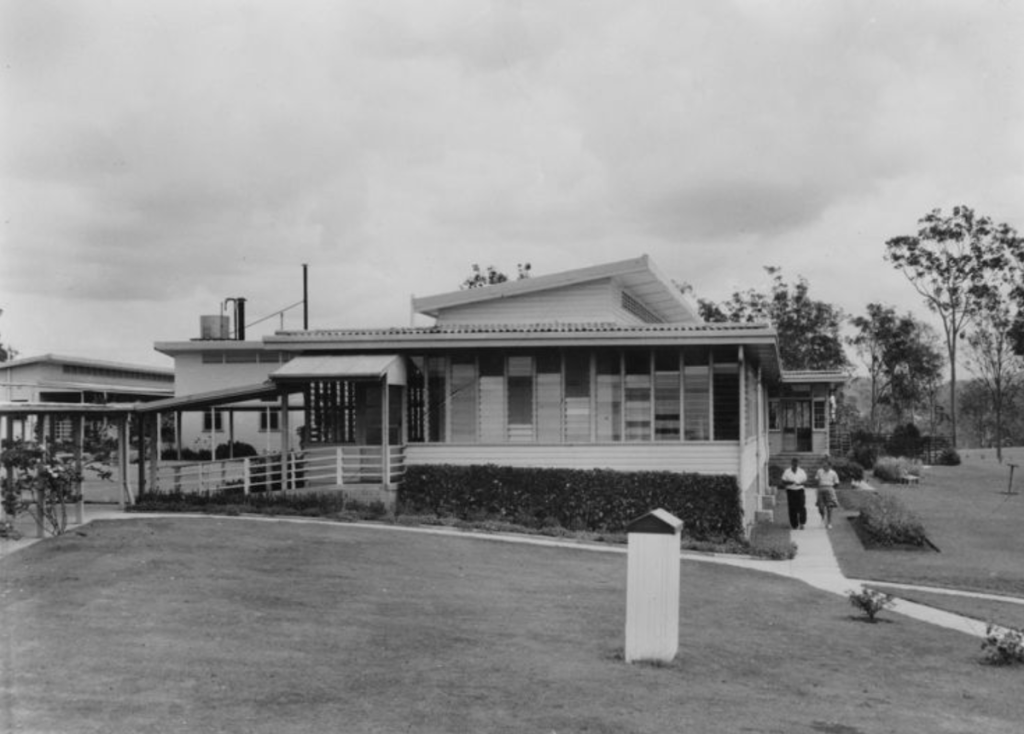
A sanctuary built on fresh air
In 1943, as Allied forces fought across the Pacific, the Allied Works Council began constructing the sanatorium for the Commonwealth Department of Repatriation, to treat returned servicemen suffering from tuberculosis.

Set on an elevated ridge, the chalet-style complex commanded broad views across the surrounding district. In an era before effective antibiotics, fresh air, good nutrition and prolonged rest were mainstays of tuberculosis treatment.
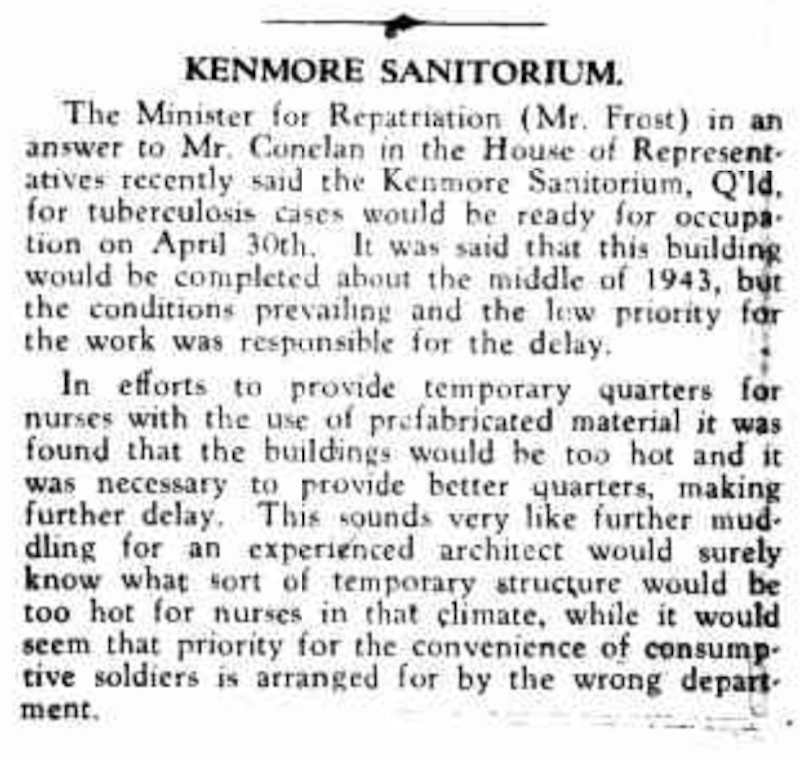
The sanatorium initially catered for 32 patients in one-, two- and four-bed wards, with temporary quarters erected for nursing staff.

Curiously, despite carrying the Kenmore name throughout its history, the hospital at 2603 Moggill Road stands in what is now Pinjarra Hills, just beyond Kenmore.
From isolation to medical breakthroughs
The opening of the sanatorium coincided with a dramatic shift in global medicine.


TB was a feared public health threat, and serious cases could leave patients ill or institutionalised for prolonged periods. The arrival of streptomycin in the 1940s, followed by combination drug therapies, radically transformed tuberculosis treatment.
Over the following years, effective drug treatments steadily reduced the need for the prolonged sanatorium stays that had defined tuberculosis care. As tuberculosis treatment changed, the institution adapted. Its role broadened after the war as it became the Kenmore Repatriation Hospital, continuing to care for returned servicemen and veterans.
Prominent physicians were among those associated with the hospital. Sir Oswald “Ellis” Murphy, a veteran of the Australian Army Medical Corps who served during the Siege of Tobruk, worked as a visiting physician between 1944 and 1954.
Kenmore formed part of Queensland’s broader repatriation medical network, alongside the major hospital at Greenslopes
| Era | Primary Function | Primary Treatment / Focus |
| 1945–1950s | Tuberculosis Sanatorium | Rest, fresh air, early antibiotics |
| 1950s–1994 | Repatriation Hospital | General veteran medical care & rehab |
| 1998–Present | Fairview Aged Care | Residential aged care, retirement living, dementia care |
A lasting legacy of care
By the time the hospital closed in April 1994, it had been part of the western suburbs for almost five decades, employing hundreds of staff over its lifetime and caring for thousands of patients.
The hospital buildings were subsequently demolished, dramatically changing the Moggill Road site. But its long association with veterans and care did not end there.
In 1998, the Fairview War Veterans’ Home opened on the former hospital site. Today, Bolton Clarke continues that lineage through Fairview, providing residential aged care, dementia care and retirement living.
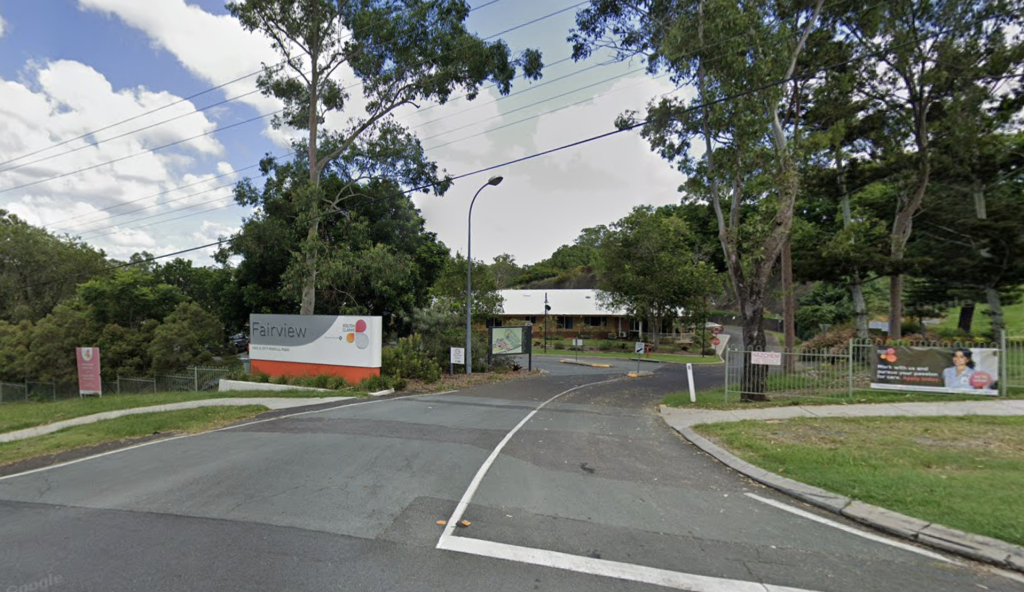
While modern motorists see an aged-care community, the ridge remains anchored to a story stretching back more than 80 years — through wartime medicine, veterans’ care and the Fairview community that occupies the site today.
Published 7-Aug-2026